01
Process
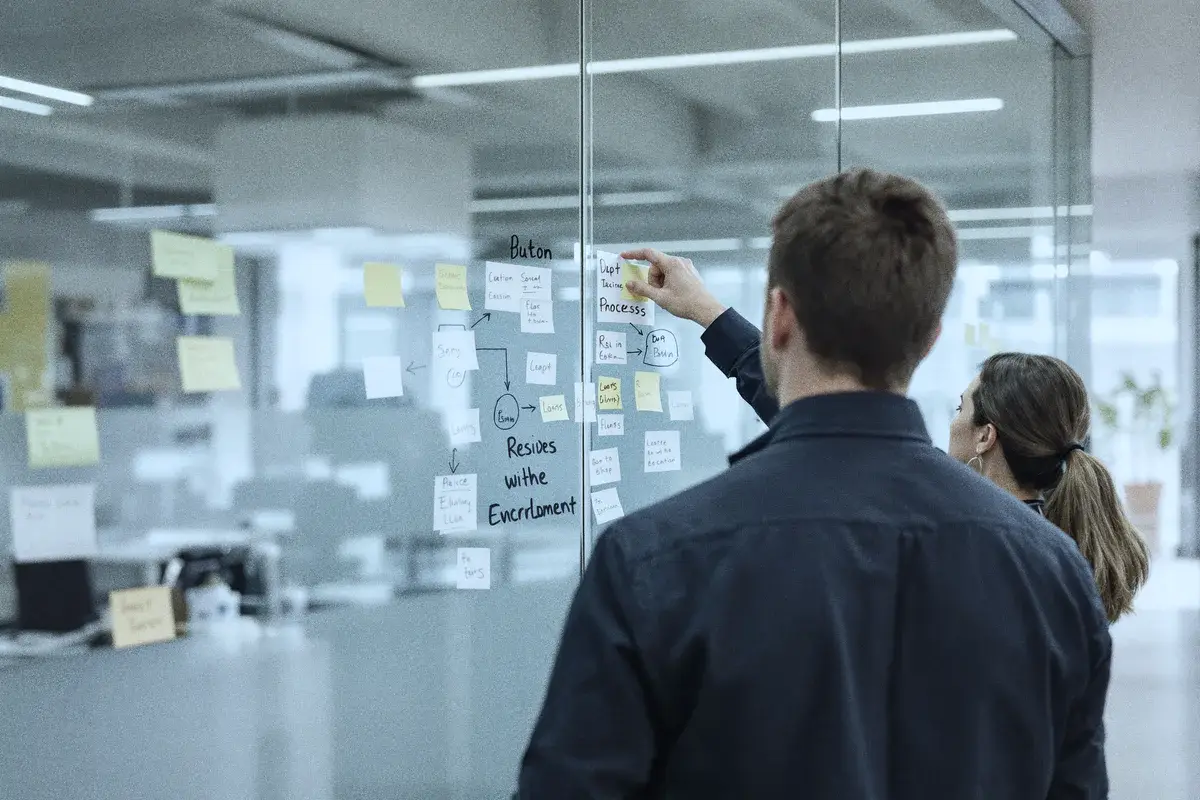
Map it and fix it before you touch AI. Don’t spend tokens automating a broken process.
AI advisory & implementation
Tillerbridge gets AI across inside the company you already run: the systems, the workflows, and the guardrails to run them safely. A senior team that covers both the engineering and the operation. No bench, no handoffs.
Our approach
One loop, run over and over, on two foundations we set before anything ships.
The loop Map it and fix it before you touch AI. Don’t spend tokens automating a broken process.

Automate the improved process. Sometimes one good prompt, sometimes a pipeline. You’re paving a road that’s already in the right place.

Measure what’s running, what it costs, and what it returns. What you see feeds the next round of process.

The rules and who owns them. Approved tools, decision rights, data and vendor agreements, model choice, and what’s allowed where.

The human side of risk. People trained, private information kept private, no personal accounts or shadow AI, and a clear way to flag when something looks wrong.
The problem
Not because the models don't work. Because the work around them doesn't.
None of these are model problems. They are process, governance, and the space between people and machines. That is the work we do.

Start here
Every engagement opens the same way. We take a short, fixed-scope read on one part of your operation and hand back a concrete recommendation. If the answer is don't build this, we say so, and you have still saved the money.
If it's worth building, the path continues into build and run.
What makes AI work
Anyone can call an API. The value is in the three things around it, and that is where most projects come apart.
Grounding the model in your data, systems and rules, so the answers are yours and current, not generic.
How you ask, and how you check the answer. Clear instructions and real evaluation are the difference between reliable and a party trick.
Multi-step workflows with the right tools, and a person in the loop where it matters. This is what turns a chatbot into work that gets done.
Our thinking
No gates, no email wall. The same references we work from, free to read.
Straight dealing
We don't resell software, take vendor commissions, or build things only we can maintain. If AI is the wrong answer for a problem, we'll tell you and save you the money. Trust is easier to keep than to win back.
We also run two non-commercial organizations: the Institute of Applied AI , which publishes public research on enterprise AI, and the Association for Executive AI Leadership , a vendor-free peer network for executives. Common founders, separate brands, nothing funnels: neither sells anything, including us. They exist to get the thinking right, and you're welcome to judge our work by them.
Who we are
Most AI projects fail between the technology and the operation. So we cover both seats: the people who build the systems, and the people who have run the kind of teams they land in.
Tillerbridge is a senior team, with Nick Major on engineering and product and Isaac Major on operations. Who we are, and where the name comes from, is on the about page.
Questions
A few lines on what you're trying to do is enough. We read every enquiry ourselves and reply within one business day.